
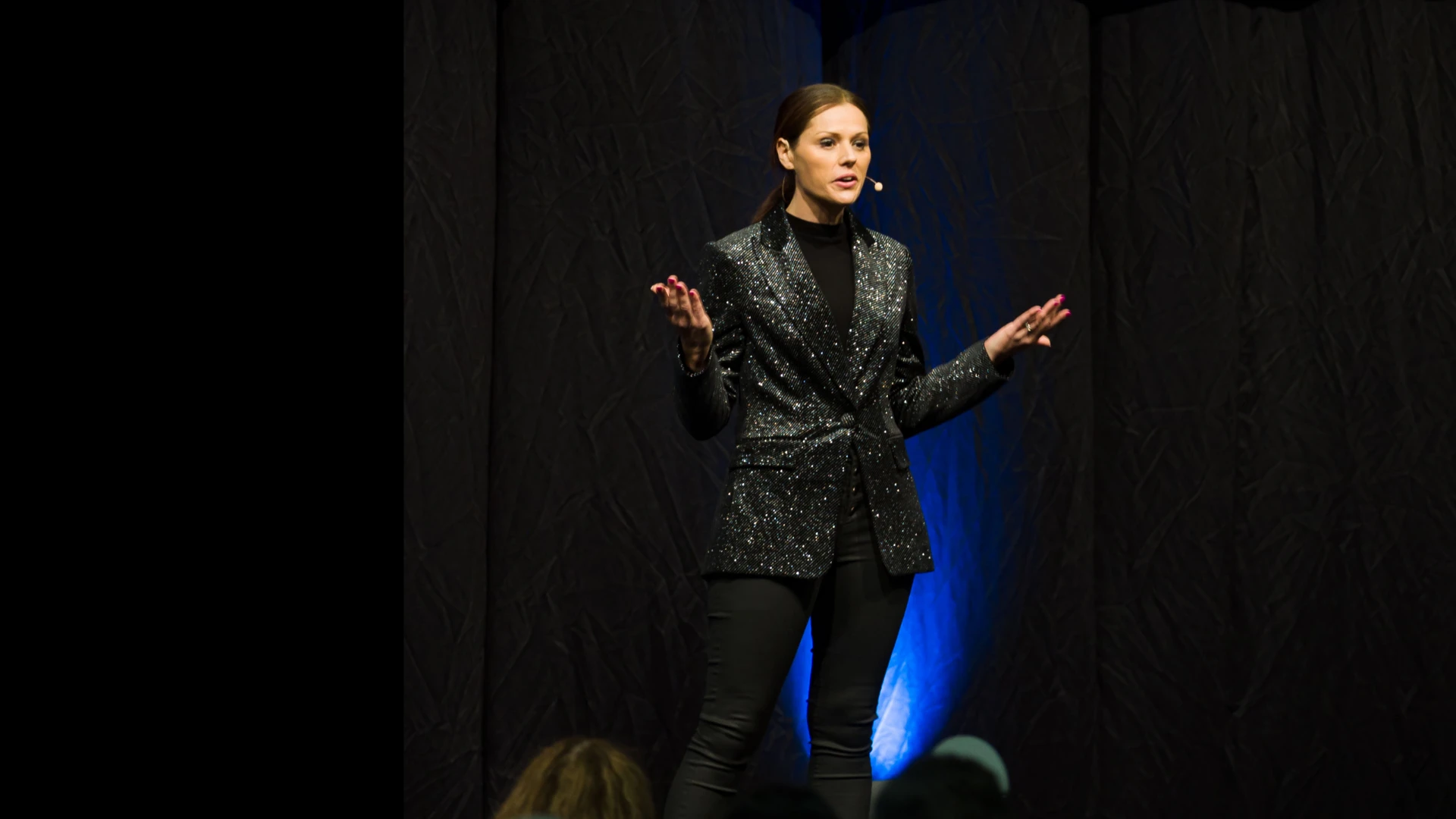
Speaking Topics
Rethinking human capability in the age of AI.
Three signature keynotes, built in collaboration with Future Crunch.
Selected audiences
50+ keynotes for leading corporate brands across Australia






We help people and organisations understand what's coming next.
Future Crunch is a science and technology research company. We track what's happening on the frontiers of human innovation, and we seek out the stories of progress, the ones we all need a little more of. We cut the signal from the noise, and we build the human capabilities that turn change into an advantage.
Then we walk on stage and change how a room thinks about the future.
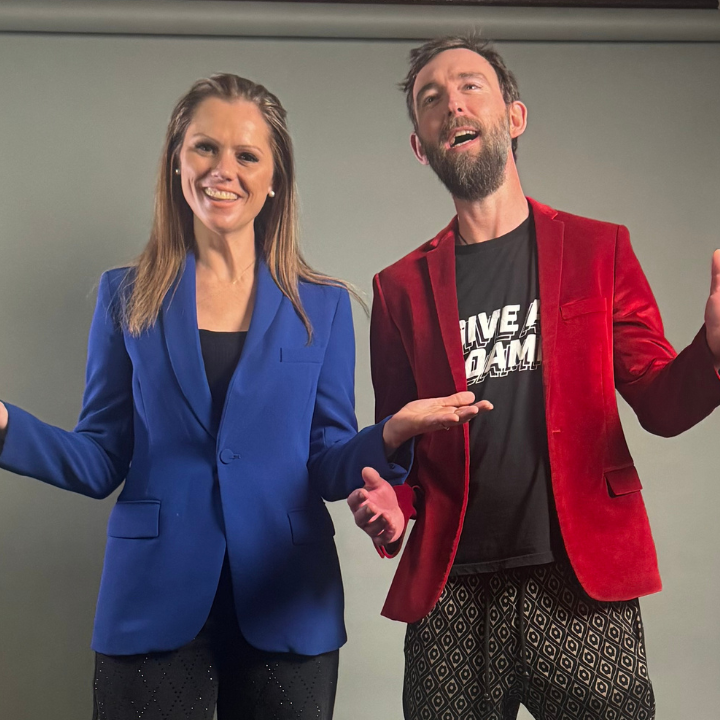
Rebecca delivers these keynotes solo, and as Principal Speaker alongside Tāne Hunter when the two present together.
Looking for keynotes built for schools and educators?
Explore Humanity SchoolsKeynote 01
Full Stack Human
The smarter the machines get, the more valuable humans become.
Developed in collaboration with Future Crunch
Is this the age of artificial intelligence, or artificial insanity?
Artificial intelligence is reshaping every industry and every profession. So why did MIT's Project NANDA study more than 300 enterprise AI initiatives and find that 95 per cent delivered no measurable return? Not because the technology failed, but because nobody prepared the humans around it to work in new ways. Our brains haven't changed much in 50,000 years. They're still built for spotting predators on the savannah, not a world that ships updates daily. The technology keeps accelerating. Human adaptation is struggling to keep up.
Organisations have poured millions into technology, systems and processes, and next to nothing into the people standing beside them. The tools keep arriving. The capacity to use them well doesn't. Your people call it overload.
Read the full descriptionShow less
Artificial intelligence breaks the equation. Machines are already better than us at many tasks, and they will be better at many more. You cannot out-machine the machines.
Which leaves one variable deciding who wins the AI decade: whether your people can learn, unlearn and think clearly at the speed the technology demands. We call them full stack humans. As intelligence becomes abundant, the capabilities that matter most become profoundly human. AI supplies the data. Your people supply the context.
This keynote explores five trainable human capabilities that decide who thrives when the rules keep moving: catching your own cognitive biases before they cost you, learning faster than the rate of change, updating your mind when the evidence does, treating curiosity as a competitive advantage, and knowing what matters when everything is shouting for attention.
Your technology is ready. This keynote asks whether your humans are. Because the smarter the machines get, the more valuable your humans become. Stay human. The world needs it.
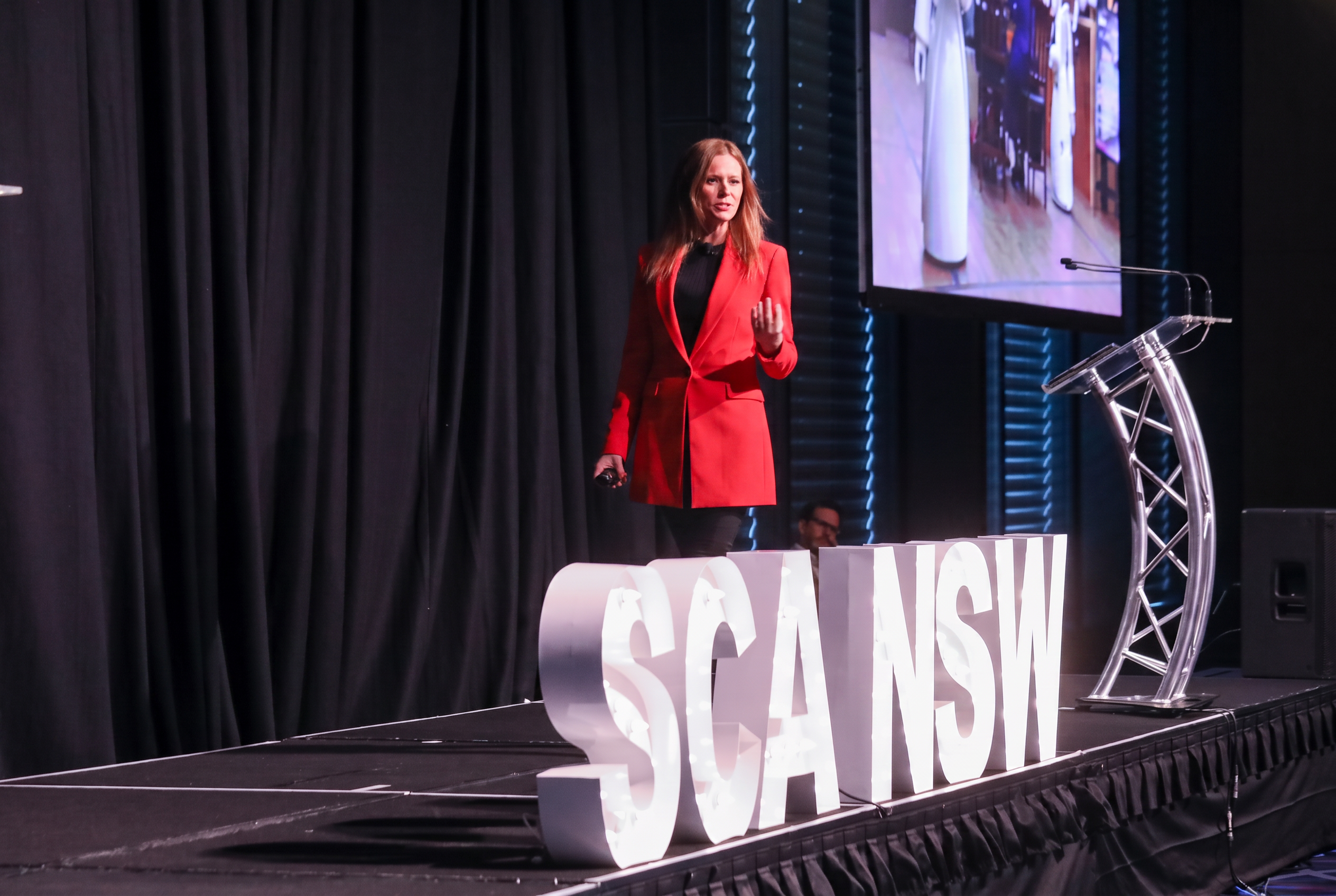
“Compelling stage presence and a powerful brand of intelligent optimism, challenging conventional thinking throughout.”
Keynote 02
Ctrl + Alt + Adapt
Adaptive intelligence: the AI no one's selling you.
Developed in collaboration with Future Crunch
For decades, success ran on a simple premise: the better your prediction, the better your outcome. Anticipate change, build the strategy, execute with discipline. That operating system built some of the world's most successful companies. It no longer works.
The future is arriving too fast to predict with any confidence. The World Economic Forum's Future of Jobs Report expects 170 million new jobs by 2030, with almost six in ten workers needing retraining to get there. When employers were asked which skills will matter most over the next five years, technology topped the list. What sat right beside it was the tell: resilience, flexibility and agility.
Read the full descriptionShow less
The organisations that thrive over the next decade won't be the ones that predict better. They'll be the ones that adapt faster.
Everyone is talking about the first AI. This keynote is about the other one: adaptive intelligence. How your teams behave in the gap between old rules dying and new ones arriving, and whether your organisation adapts or fractures when uncertainty stops being the exception and becomes the whole operating environment.
Drawing on neuroscience, behavioural psychology and over a decade of Future Crunch research, Ctrl + Alt + Adapt shows how to build teams that stay curious under pressure, collaborative in complexity and steady in uncertainty. Your people arrived in the world curious, experimental and unafraid of unfinished things. Somewhere along the way, that got trained out of them. This keynote is about getting it back.
The future belongs to the organisations still curious when it arrives.
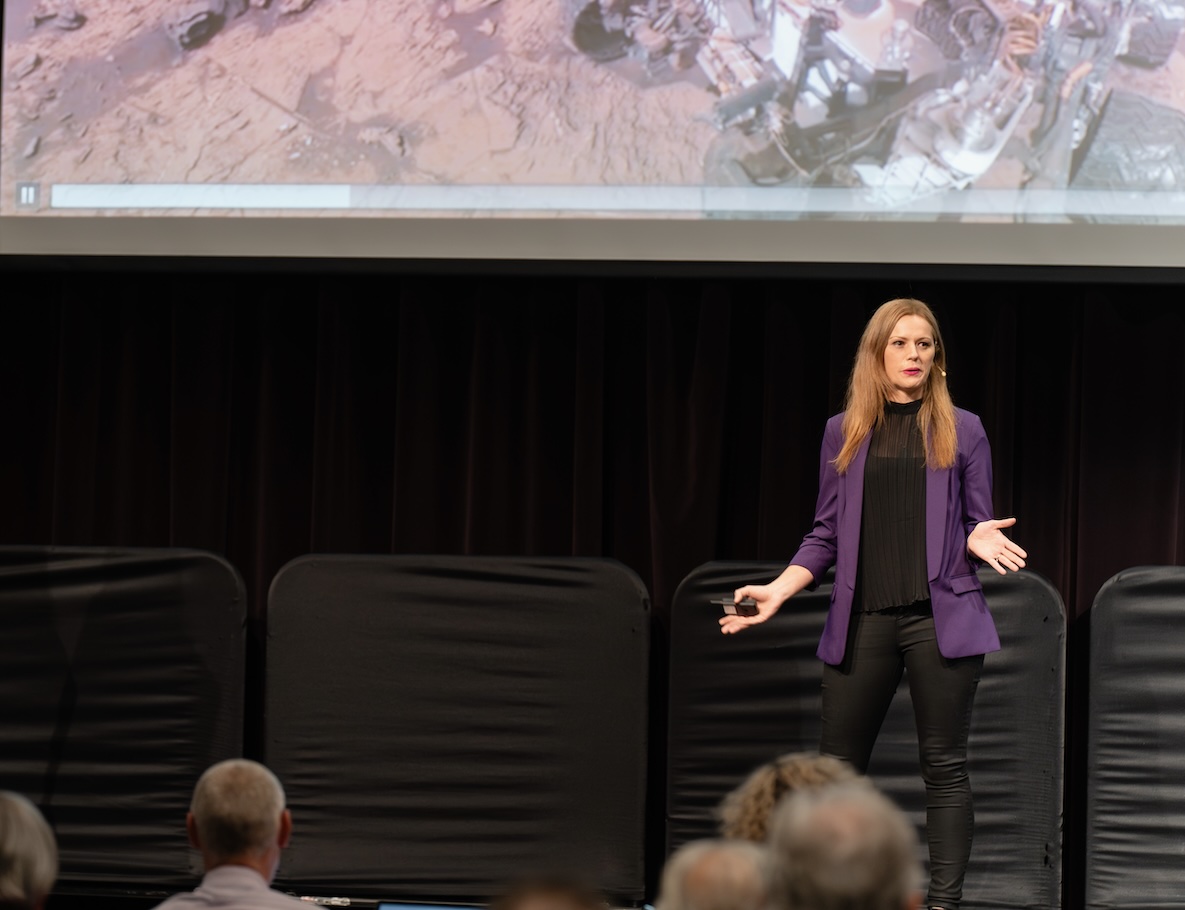
“Engaging presence and sharp insight that captivated the room from start to finish.”
Keynote 03
Ground Truth
A field report from the next economy.
Developed in collaboration with Future Crunch
You're not imagining it. Since 2020 the ground has moved under all of us. Climate shocks, economic whiplash, supply chains snapping, a geopolitical order rearranging itself in real time. People can feel it in their bones, that this is bigger than a bad news cycle. It's a handover from one economic era to the next, and the old one is not coming back.
But breakdown is only half the story. In the same decade the old model is cracking, the foundations of the next economy are being poured. Solar is now the cheapest electricity our species has ever generated, artificial intelligence has collapsed the cost of cognition a thousandfold in three years. Gene editing has walked out of the lab and into functional cures. Robotics, new materials, a privatised space economy: the same pattern, everywhere the feed isn't looking. It's a capital-allocation story, and the smart money has already voted.
Read the full descriptionShow less
The leadership challenge is holding both realities at once, without being overwhelmed by one or seduced by the other. That takes intelligent optimism, a discipline with two jobs: the anchor that keeps decisions steady in flux, and the antenna that finds where momentum and advantage are quietly compounding.
Most conversations about the future are predictions. This one is a report from the ground. The next economy is being built with or without you, and every organisation is choosing a side: building the new paradigm and capturing the growth, or defending a model already bleeding capital, talent and returns. One of those is foresight. The other is nostalgia with a budget.
In their words
What audiences say.
Compelling stage presence and a powerful brand of intelligent optimism, challenging conventional thinking throughout.
Alex Edney
Head of Culture and Diversity, World Vision
Preparing educators for the future, so they can prepare young people for it.
Humanity Schools is a research platform translating the future of education into keynotes for school leadership teams, education conferences and parent communities.
These are not general keynotes adapted for education. They give educators practical language and frameworks for developing the human capabilities young people will increasingly need: judgement, agency, adaptability, connection, creativity and systems thinking.
Because as AI makes knowledge and technical capability more abundant, academic achievement alone will not prepare young people for what comes next.
The difference will be educators who understand which human capabilities matter most, and how to strengthen them through the curriculum, the classroom and the culture of a school.